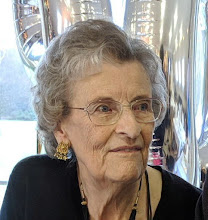
I think it is probably a mistake to take a break from blogging - if you lose the momentum, you may find it difficult to get going again. That's what has happened to me anyway. "Back after Christmas" I said, and here we are 10th of January already. Every day I sit at my computer and deal with emails, or surf other people's blogs; I may leave a comment or two but that's it. When I say to myself "time to blog or your friends will lose interest" ..... I can't do it. I'm not in the mood, I haven't the heart for it. In fact I'm feeling kind of sulky and reclusive, sort of "what's the point"-ish. "Is this depression?" I ask myself.
~
Not surprising with the weather we have been having. I always tend to be rather down in the winter but this year it's worse than ever. And even when the sun shines it is too cold for me to walk, as the very cold air in my lungs makes me breathless and I can't walk fast enough to keep warm. So I stay indoors and stew in my own juice, nibbling constantly just to have something comforting in my day. Oh sod it! It's a bugger being old!
~
So why am I telling you all about it? Not really my style. But then on the other hand I started this blog with the idea of "telling it how it is" - and this is how it is for me at the moment. What decided me to write about it here was an article in The Mail on Sunday written by Jane Alexander yesterday, (and drawn to my attention by the Digital Unite blog). It seems that blogging about her problems and her "black dog" is her preferred form of therapy. So why not give it a try?
~
When I talked to my GP about feeling depressed she gave me an assessment form to fill in. You know the sort of thing:
Over the last 2 weeks, how often have you been feeling Down, Depressed, or Hopeless?
Not at all :: Several days :: More than half the days :: Nearly every day.
Silly question to start with, as each of the three is different in my view, if only in degree. I would say "Nearly every day" for Down; "Several days" or "More than half" for Depressed; but "Not at all" for Hopeless. Reassuringly, I was also able to write "Not at all" for "Feeling you would be better off dead, or Thoughts of hurting yourself in some way".
~
So, first off I wanted to rewrite the questions. Then I wanted an additional column to tick, as the four given didn't cover the full range of my experience. Then for one question I was on the borderline, and couldn't decide which way to go, so opted for giving myself a higher score. The GP wouldn't tell me in advance how the scoring was done, and I was quite surprised to find that my score did qualify me for treatment. She couldn't really believe it - she keeps telling me I always strike her as very "together". But together or not, I know that the quality of what I am feeling is different from previous winters.
~
Nevertheless, I suddenly found we were both agreeing that many of the symptoms occur in old age anyway, like feeling tired, low energy and trouble sleeping. But so what? Does that mean I am not feeling depressed, but simply feeling old? No, I'm feeling depressed because I am old. Does that mean my depression is inevitable, or should be disregarded? Does that lower my score and make treatment unnecessary, or does it just reinforce the view that one of the big problems of health in old age is depression, which can be treated?
~
Anyway, I didn't really want another lot of pills to take with all the others I have to keep track of , and take at the right time, and order more of every other week it seems. So I decided not to have a prescription this time, though I know she will give me one if I go back again and ask. She was not unsympathetic (despite being a bit disbelieving), and seemed to think as poorly of the form as I did. And I think at least she respects me for being someone who is knowledgeable, articulate, and in charge of my own health.
~
Well, that's my whinge for today - or was it a rant? I wouldn't be sure. I certainly feel a lot better for it. And I've just had another happy thought: there was a time 14 years ago when I felt a whole lot worse than I do now. Just to remind my self, here is a poem I wrote at the time.
~
MYSTERY ILLNESS
Nights of panic
Days of gloom
Trapped alone
Within the room
Endless fevers
Strength that wanes
Thoughts that fester
Fears and pains
Guilt and self-blame
Haunt the mind
No solution
Can I find
Wandering blindfold
In a maze
No way out
To better days
Normal life’s
A long-gone dream
In my head
An endless scream
What is happening?
How and why?
Must I simply
Nights of panic
Days of gloom
Trapped alone
Within the room
Endless fevers
Strength that wanes
Thoughts that fester
Fears and pains
Guilt and self-blame
Haunt the mind
No solution
Can I find
Wandering blindfold
In a maze
No way out
To better days
Normal life’s
A long-gone dream
In my head
An endless scream
What is happening?
How and why?
Must I simply
Wait to die?
~